
Article
Buyers
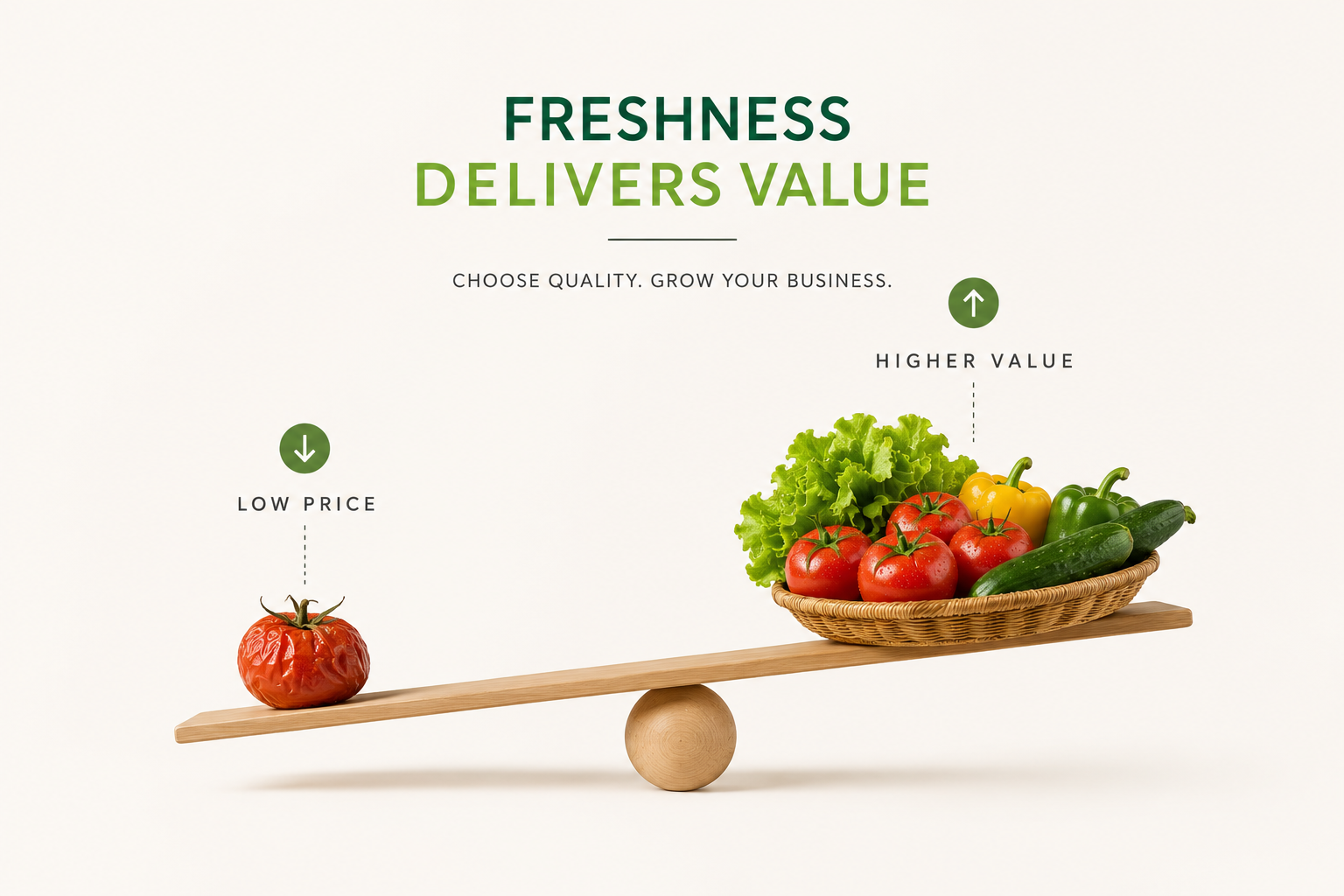
Why Produce Freshness Matters More Than Price
Why prioritizing freshness over short-term pricing helps you reduce losses, improve customer satisfaction, strengthen supplier relationships, and maintain more reliable agricultural operations.
When sourcing agricultural produce, it is often tempting to prioritize the lowest available price. While pricing remains important for profitability, focusing only on cost can create larger operational problems later across storage, transportation, resale, and customer satisfaction.
Freshness directly affects how long produce remains usable after delivery. Produce that appears slightly cheaper at the point of purchase may already be approaching deterioration because of poor harvesting practices, delayed transportation, excessive heat exposure, or weak storage conditions. In many situations, these hidden quality problems create higher losses than the savings gained during purchasing.
Understanding the true value of freshness helps you make stronger procurement decisions while reducing avoidable waste throughout your supply chain operations.
Fresh produce maintains better texture, appearance, nutritional quality, shelf life, and resale value. Customers naturally respond more positively to produce that appears clean, firm, vibrant, and properly handled. Poor freshness, on the other hand, quickly damages customer trust and weakens confidence in your business operations.
One of the most common operational mistakes is purchasing produce based only on bulk pricing without considering post-delivery performance. Produce that deteriorates rapidly after arrival increases spoilage rates, reduces resale windows, creates inventory pressure, and increases operational losses.
Freshness should therefore be evaluated as a long-term operational factor rather than simply a visual characteristic at the time of purchase.
Transportation conditions heavily influence freshness quality. Produce exposed to excessive heat, overcrowded transport conditions, rough handling, or delayed delivery timelines deteriorates significantly faster. Even if produce initially appears acceptable externally, internal quality may already be declining.
You should always pay attention to how suppliers handle harvesting, packaging, loading, transportation, and storage before delivery. Suppliers with stronger post-harvest handling standards usually deliver produce with longer shelf life and more predictable quality consistency.
Storage capability also changes how freshness affects your operations. If your produce remains in storage for several days before distribution or resale, freshness becomes even more important because lower-quality produce deteriorates much faster under extended storage timelines.
Fresh produce also improves operational flexibility. Longer shelf life allows you to manage inventory more efficiently, reduce panic selling, improve distribution planning, and maintain more stable customer supply schedules.
Supplier reliability plays a major role in freshness consistency. Reliable suppliers often maintain stronger harvesting discipline, cleaner packaging standards, organized transportation systems, and more efficient delivery coordination. These operational practices directly affect how fresh produce remains after arrival.
Communication with suppliers helps improve freshness outcomes significantly. You should clearly communicate your quality expectations, delivery timelines, packaging preferences, and handling requirements consistently. Suppliers who understand your operational expectations are usually better positioned to meet them reliably over time.
Seasonal conditions should also influence freshness expectations. During hotter periods, produce deteriorates faster if transportation and storage systems are not properly managed. Understanding seasonal environmental risks helps you plan procurement and storage operations more effectively.
Digital agricultural platforms are also improving freshness visibility across supply chains. Better coordination between farmers, storage operators, transporters, and buyers helps reduce delays and improves produce handling efficiency throughout the delivery process.
Ultimately, successful agricultural sourcing depends on more than simply minimizing purchase costs. When you prioritize freshness, handling quality, consistency, and supplier reliability, you reduce losses, improve customer satisfaction, strengthen inventory stability, and build more sustainable long-term operations.
In many situations, the cheapest produce becomes the most expensive produce once spoilage, customer dissatisfaction, and operational inefficiencies are fully considered.