
Guide
Buyer
How to Identify High-Quality Fresh Produce Before Buying
Evaluate produce quality properly, reduce purchasing risks, improve supplier selection, and maintain better consistency across your agricultural supply chain operations.
Fresh produce quality directly affects your customer satisfaction, resale value, storage performance, and overall profitability. Whether you supply restaurants, supermarkets, hotels, retail shops, processors, or wholesale markets, the quality of produce you purchase determines how efficiently your operations perform after delivery.
One of the biggest challenges you may face when sourcing produce is identifying products that not only appear visually attractive at the point of purchase but also remain stable during transportation, storage, and resale. In many situations, produce may initially look acceptable externally while already beginning to deteriorate internally because of poor harvesting, rough transportation, heat exposure, or poor storage conditions.
Understanding how to evaluate produce properly helps you reduce losses, improve purchasing decisions, and build stronger long-term supplier relationships.
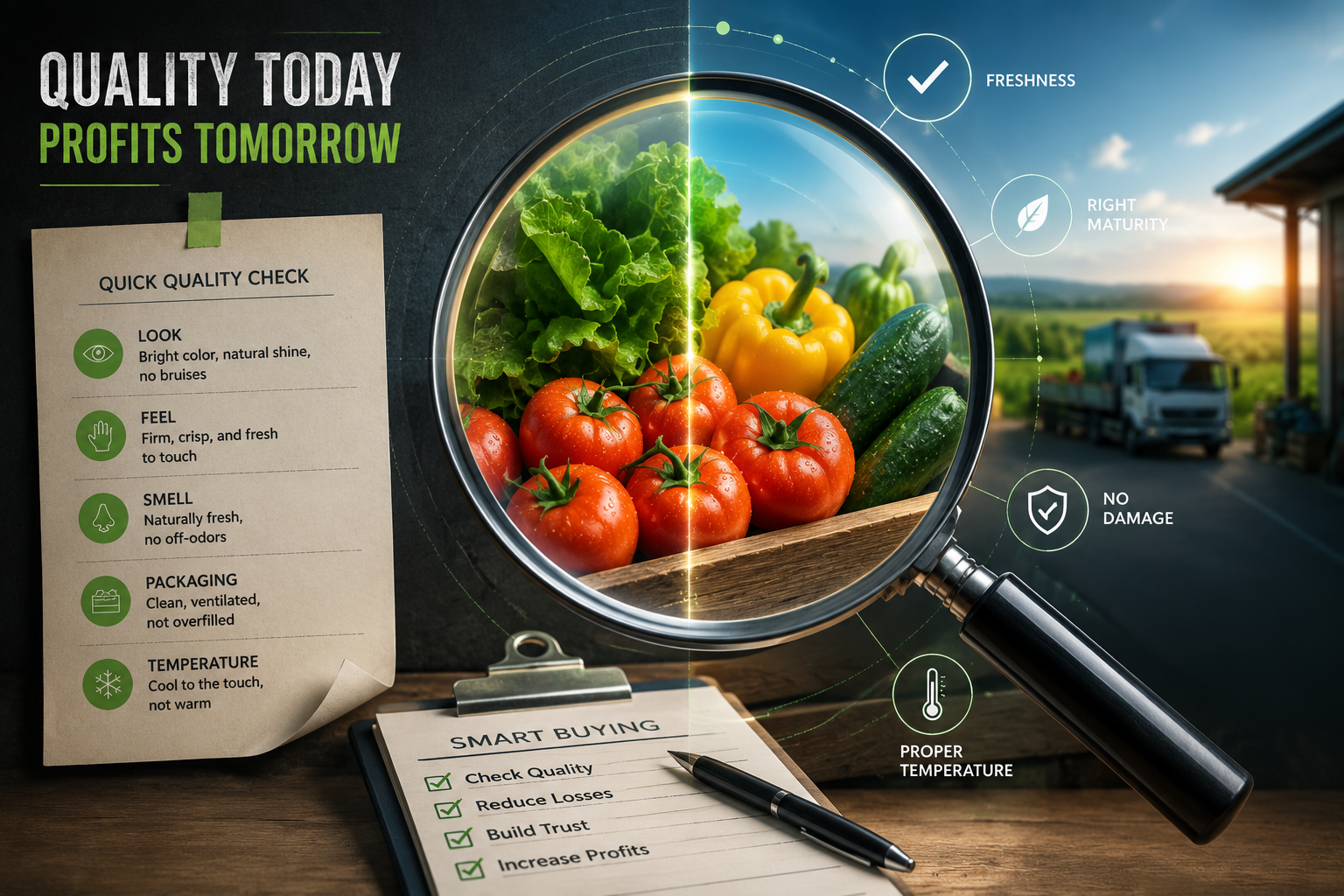
Your inspection process should always begin with visual quality assessment. Fresh produce should appear clean, properly sorted, and relatively consistent in size, maturity, and color. Inconsistent grading often reflects weak handling standards and poor post-harvest management practices.
You should carefully inspect produce for bruising, cuts, soft spots, cracking, discoloration, mold, moisture buildup, and visible pest damage. These signs often indicate rough transportation conditions, improper storage, or delayed delivery timelines before the produce reached you.
Texture also provides important quality indicators. Fresh vegetables and fruits should maintain firmness appropriate for their produce type. Excessive softness often indicates overheating, prolonged storage, poor ventilation, or advanced ripening stages that significantly reduce shelf life.
Smell can also reveal hidden quality issues. Spoiled or fermenting produce often develops sour or unpleasant odors even before visible deterioration becomes severe. If produce has unusual smells or signs of moisture-related spoilage, you should inspect it carefully before accepting delivery.
Packaging quality provides additional insight into supplier professionalism and produce handling standards. Clean, properly ventilated containers usually indicate stronger operational discipline compared to overloaded sacks, dirty packaging materials, or damaged crates.
You should also pay attention to produce temperature during delivery. Fresh produce exposed to excessive heat during transportation deteriorates much faster after arrival. Suppliers who maintain proper transportation and storage conditions are more likely to deliver stable, longer-lasting produce consistently.
Consistency is one of the strongest indicators of supplier reliability. You benefit more from suppliers who repeatedly deliver predictable produce quality over time rather than suppliers who occasionally deliver high-quality produce inconsistently.
Reliable suppliers often maintain better harvesting discipline, stronger sorting practices, cleaner packaging systems, and more organized transportation processes. These operational standards reduce your purchasing risks significantly.
Seasonal market patterns should also influence your purchasing decisions. Produce quality and pricing fluctuate throughout the year depending on weather conditions, harvest cycles, transportation availability, and market demand. Understanding these seasonal patterns helps you negotiate more effectively and plan procurement more efficiently.
Your storage timelines should also influence purchasing strategy. Produce intended for immediate resale may require different quality standards compared to produce expected to remain in storage for several days before distribution. Aligning purchasing decisions with your operational timelines helps reduce unnecessary spoilage and inventory losses.
Communication with suppliers also improves quality management significantly. You should communicate your grading expectations, packaging requirements, delivery timelines, and handling standards clearly and consistently. Suppliers who understand your expectations are usually better positioned to meet them reliably.
Long-term supplier relationships often produce stronger outcomes than constantly changing suppliers based only on short-term price differences. Stable supplier relationships improve accountability, operational predictability, communication efficiency, and overall supply consistency.
Digital agricultural marketplaces are also changing how produce sourcing works. Platforms that improve visibility into supplier performance, produce listings, storage coordination, and delivery management help you make more informed procurement decisions while reducing sourcing risks.
Ultimately, successful produce purchasing depends on more than simply finding the cheapest available price. When you prioritize consistency, freshness, handling quality, supplier professionalism, and operational reliability, you position yourself to reduce losses, improve customer satisfaction, and strengthen long-term business performance across your agricultural supply chain.